
Introduction
That mid-afternoon slump. The pre-workout hunger pang. The “I need something now or I’m not making it to dinner” moment. We’ve all been there, and what you reach for in that moment matters more than most people realize. The right snack can steady your blood sugar, sharpen your focus, and carry you through the rest of your day. The wrong one can leave you crashing twenty minutes later, reaching for something else.
This guide walks through what actually makes a snack energizing (hint: it’s not just sugar), twenty great options to keep on hand, and practical tips for snacking smarter — not less.
Why Healthy Snacks Matter
Snacking gets a bad reputation, but used well, it’s a tool. A well-timed snack:
- Keeps blood sugar stable, avoiding the spike-and-crash cycle that leaves you tired and irritable
- Prevents overeating at your next meal by keeping hunger from spiraling
- Supports steady energy for work, workouts, or just getting through your day
- Delivers nutrients you might otherwise miss, like fiber, healthy fats, and protein
The problem isn’t snacking itself — it’s reaching for refined carbs and sugar that spike energy briefly and then drop you lower than where you started.
What Makes a Snack Energizing?
Not all snacks are created equal. A truly energizing snack tends to combine a few key elements:
- Protein — slows digestion and keeps you fuller, steadier, longer
- Fiber — slows the absorption of sugar into your bloodstream
- Healthy fats — provide long-lasting fuel rather than a quick spike
- Complex carbohydrates — give you usable energy without the crash of refined sugar
- Hydration — many energy dips are actually mild dehydration in disguise
The best snacks usually combine at least two of these — like an apple (fiber, carbs) with peanut butter (protein, fat).
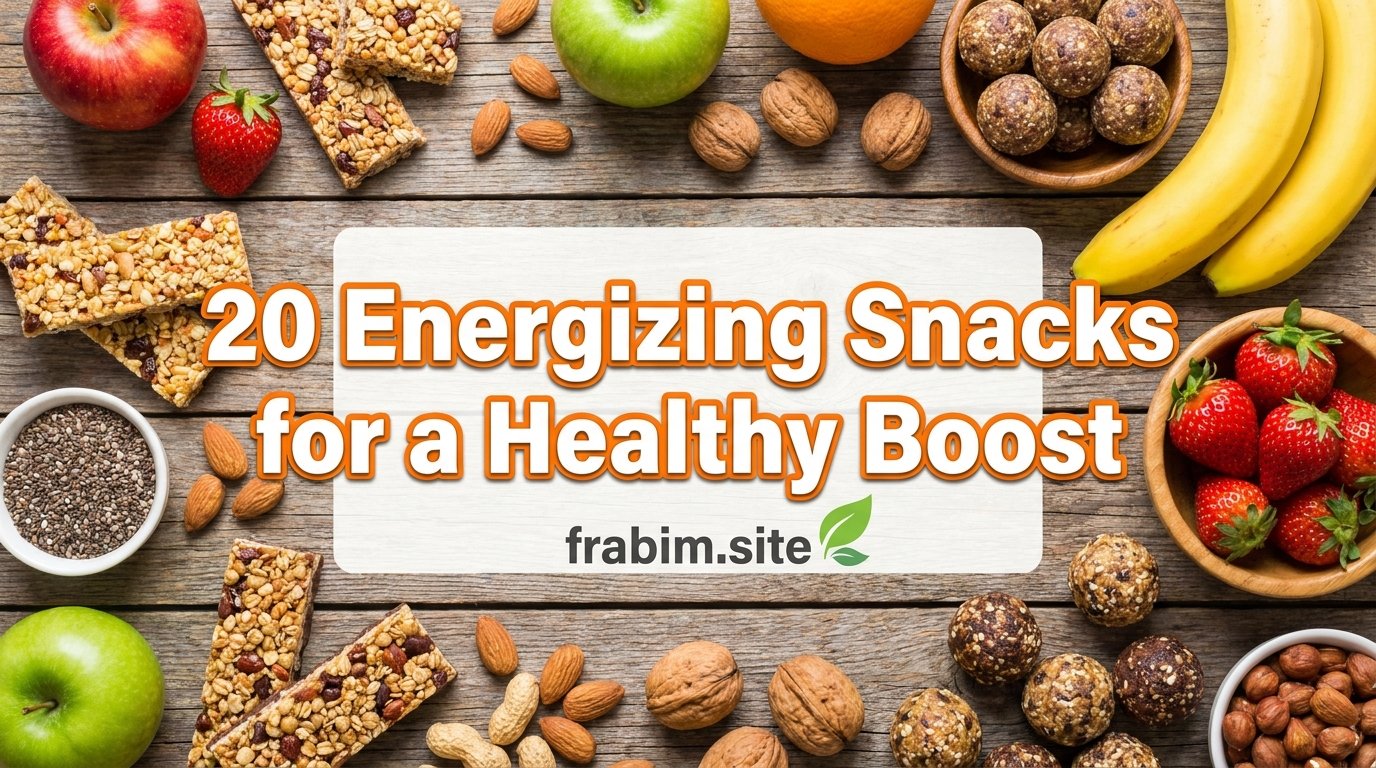
20 Energizing Snacks for a Healthy Boost
- Greek yogurt with berries — protein-packed and full of antioxidants
- Apple slices with almond butter — fiber plus healthy fat for lasting fuel
- Mixed nuts — a compact mix of protein, fat, and micronutrients
- Hard-boiled eggs — pure, simple protein
- Hummus with veggie sticks — fiber and plant protein in one bite
- Banana with peanut butter — quick carbs balanced by fat and protein
- Trail mix (nuts, seeds, dried fruit) — portable and balanced
- Cottage cheese with pineapple — protein with a natural sweetness
- Edamame — plant protein and fiber, lightly salted
- Whole grain crackers with cheese — complex carbs plus protein
- Smoothie with spinach, banana, and protein powder — nutrient-dense and easy to digest
- Chia seed pudding — fiber and omega-3s in a make-ahead format
- Roasted chickpeas — crunchy, fiber-rich, protein-packed
- Avocado on whole grain toast — healthy fats and complex carbs
- Air-popped popcorn — whole grain fiber without the heaviness
- String cheese — fast, portable protein
- Overnight oats — slow-release energy, easily customized
- Dark chocolate (70%+) with almonds — antioxidants plus healthy fat
- Cucumber slices with tzatziki or yogurt dip — hydrating and light
- Protein energy balls (oats, nut butter, honey) — homemade, portable, balanced
Nutritional Benefits of These Snacks
What ties this list together is balance. Many — like Greek yogurt, eggs, and edamame — deliver protein that keeps you satisfied for hours rather than minutes. Others, like chia pudding, avocado toast, and trail mix, bring in healthy fats that support brain function and sustained energy. Fiber-rich choices like roasted chickpeas, popcorn, and apple slices slow digestion, which helps prevent the blood sugar spikes that lead to energy crashes. And a few, like berries and dark chocolate, add antioxidants that support overall health alongside the energy boost.
Best Times to Eat Energy-Boosting Snacks
Timing can make a real difference in how effective a snack is:
- Mid-morning (10–11 AM): bridges the gap between breakfast and lunch, especially if breakfast was light
- Mid-afternoon (2–4 PM): combats the natural post-lunch energy dip
- Pre-workout (30–60 minutes before): favor easily digestible carbs with a little protein, like a banana with a small amount of nut butter
- Post-workout: prioritize protein and carbs together to support recovery, like Greek yogurt with fruit
- Evening: lighter, lower-sugar options like cucumber with yogurt dip or a small handful of nuts, to avoid disrupting sleep
Healthy Snacking Tips
- Pre-portion snacks so you’re not eating straight from a bulk bag
- Pair a carb with a protein or fat every time for more staying power
- Keep healthy options visible and accessible — what’s on your counter gets eaten first
- Stay hydrated before assuming you’re hungry; thirst is often mistaken for hunger
- Plan ahead for busy days so vending machines and drive-thrus aren’t your only option
- Listen to actual hunger cues rather than snacking purely out of boredom or habit
Common Snacking Mistakes to Avoid
- Skipping protein and fiber, leaving you snacking again within the hour
- Eating straight from the package, which makes portion sizes easy to lose track of
- Treating “healthy” labels at face value — many granola bars and flavored yogurts are loaded with added sugar
- Snacking on autopilot while distracted by screens, which can lead to overeating
- Waiting until you’re starving to eat, which often leads to grabbing whatever’s fastest, not healthiest
- Under-hydrating, which can masquerade as hunger or fatigue
How to Choose the Right Snack for Your Lifestyle
The “best” snack depends on your day:
- Busy/on-the-go: string cheese, trail mix, or a banana — minimal prep, easy to carry
- Active/athletic: combinations with carbs and protein, like overnight oats or a smoothie, to fuel performance and recovery
- Desk-bound/office work: lower-calorie, high-fiber options like veggies with hummus to avoid an afternoon slump without overdoing calories
- Trying to manage weight: protein-forward, lower-calorie-density snacks like Greek yogurt, hard-boiled eggs, or cucumber with dip
- Plant-based: hummus, edamame, roasted chickpeas, and nut butters cover protein and fat needs
Easy Homemade Energy Snack Ideas
- No-bake energy balls: blend oats, peanut butter, honey, and a handful of chocolate chips or chia seeds; roll into balls and refrigerate
- DIY trail mix: combine your favorite nuts, seeds, and a small portion of dried fruit in a jar for grab-and-go portions
- Homemade hummus: blend chickpeas, tahini, lemon juice, garlic, and olive oil for a fresher, lower-sodium dip
- Overnight oats: combine oats, milk (dairy or plant-based), chia seeds, and your choice of fruit in a jar, then refrigerate overnight
- Roasted chickpeas: toss canned chickpeas with olive oil and spices, then roast until crisp for a crunchy snack
Frequently Asked Questions (FAQs)
What’s the healthiest snack for energy? There’s no single “best” snack — but anything combining protein, fiber, or healthy fat (like Greek yogurt with berries, or apple slices with almond butter) tends to provide the steadiest energy.
Are snacks bad for weight loss? Not inherently. Thoughtful snacking can actually support weight management by preventing overeating at meals — it’s the type and portion of snack that matters.
How often should I snack? This varies by person, but one to two snacks a day, timed around natural energy dips, works well for most people.
Can snacks replace a meal? Occasionally, a substantial snack (like a smoothie with protein, fruit, and greens) can stand in for a light meal, but snacks generally shouldn’t be a regular meal replacement.
What should I avoid when snacking for energy? Steer clear of snacks that are mostly refined sugar or simple carbs with little protein or fiber — they tend to cause a quick spike followed by a crash.
Conclusion
Energizing snacks aren’t about restriction or eating “perfectly” — they’re about giving your body steady, reliable fuel between meals. With a bit of planning and a stocked pantry or fridge, you can swap the usual energy-crash cycle for something that actually keeps you going. Pick a few from this list, try the homemade options when you have time, and notice how much steadier your energy feels.

Leave a Reply