
Introduction
The same sandwich, the same apple, the same granola bar — by Wednesday, lunch has stopped being something to look forward to. Whether you’re packing for yourself before a long workday or filling a kid’s lunchbox before the school bus arrives, that midday meal deserves more thought than it usually gets. The good news: with a little planning, “outside-the-lunchbox” doesn’t have to mean more effort. It just means a few new ideas in your rotation.
This guide covers what actually makes a lunch both healthy and exciting, ten creative meals you can start making this week, and practical tips on freshness, budget, food safety, and the mistakes worth avoiding.
Why Creative Lunch Ideas Matter
Eating the same meal on repeat isn’t just boring — it can quietly chip away at how much you actually look forward to eating, which matters for kids learning to enjoy a variety of foods and for adults trying to stay consistent with healthy habits. Variety also means more balanced nutrition over the course of a week, since different meals naturally bring different vitamins, proteins, and textures to the table. And there’s a simple psychological boost in opening a lunch bag to something a little unexpected instead of the same routine.
What Makes a Lunch Both Healthy and Exciting?
A genuinely satisfying lunch usually balances four things:
- Protein to keep energy steady through the afternoon (chicken, eggs, beans, yogurt, nut or seed butters)
- Complex carbohydrates for sustained fuel (whole grains, pasta, rice, fruit)
- Color and texture — a mix of crunchy, creamy, and fresh elements keeps meals interesting
- Portability — food that travels well and doesn’t turn soggy or unsafe by midday
Hitting all four doesn’t require complicated recipes. Often it’s just a matter of packing components separately (like dressing on the side) or choosing containers that keep things crisp.
Benefits of Planning Meals for Work and School
Planning lunches ahead pays off in several ways: it cuts down on the morning scramble, reduces the temptation to buy something less healthy (and more expensive) out of convenience, and gives you more control over portion sizes and ingredients — especially helpful for allergies, picky eaters, or specific dietary goals. It also tends to reduce food waste, since planned meals use up ingredients before they go bad.
How to Save Time with Meal Prep
A few habits make meal prep painless:
- Batch-cook proteins and grains once or twice a week (grilled chicken, hard-boiled eggs, rice, quinoa) and mix-and-match them into different lunches.
- Prep components, not just full meals. Washed and chopped vegetables, portioned dressings, and pre-cooked grains can be assembled into several different lunches in minutes.
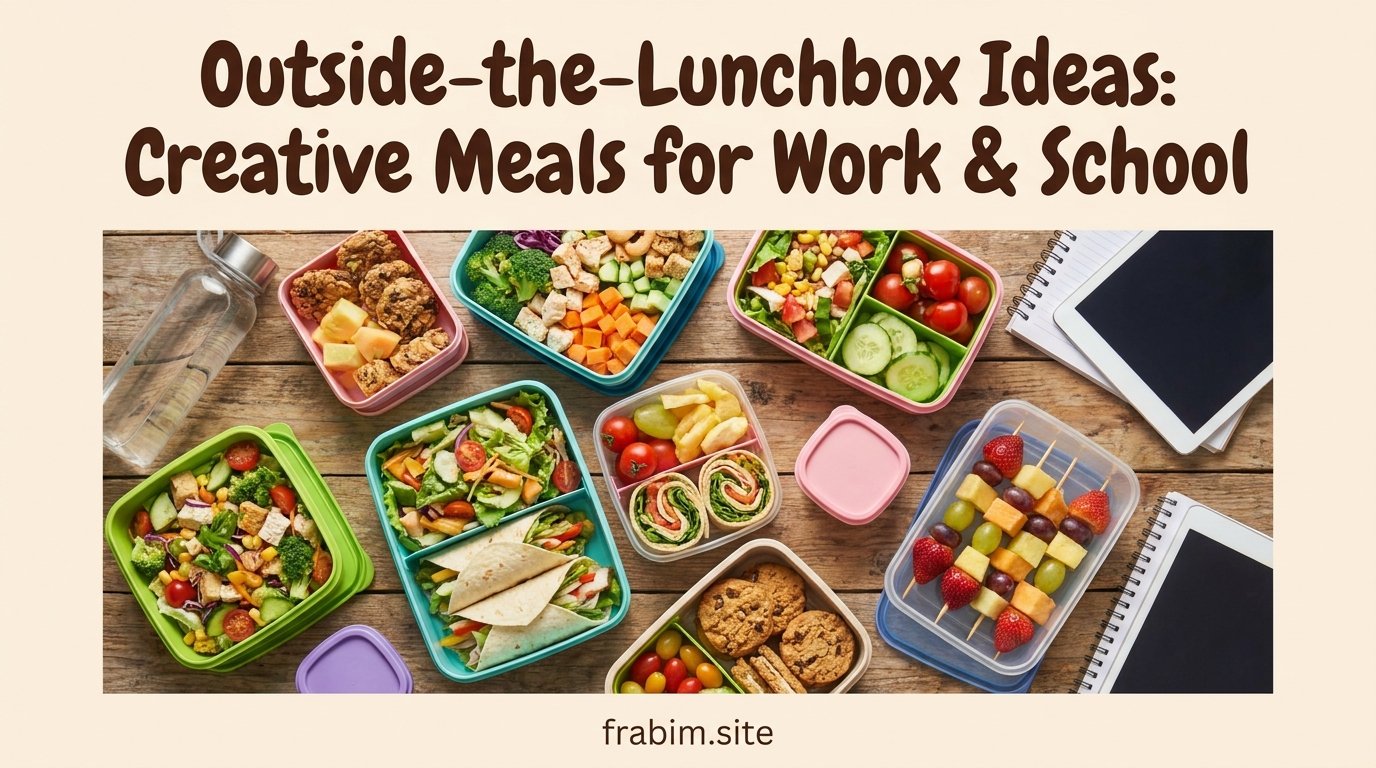
- Use the right containers. Mason jars, bento boxes, and compartmentalized containers keep ingredients fresh and separate until it’s time to eat.
- Pick one prep day. Sunday or Monday evenings work well for most schedules — an hour of cooking can cover three to five lunches.
10 Outside-the-Lunchbox Ideas
1. Mason Jar Salad with Homemade Dressing
Layer dressing at the bottom, followed by hardy vegetables (carrots, cucumber, bell pepper), a protein (chickpeas, grilled chicken, or feta), and leafy greens on top. The dressing stays separated from the greens until you shake the jar right before eating, so nothing wilts. These keep well in the fridge for up to four days, making them ideal for batch prep.
2. Mediterranean Chickpea Wrap
Mash chickpeas with a little olive oil, lemon juice, and cumin, then wrap with hummus, cucumber, tomato, and feta in a whole wheat tortilla. It’s a plant-forward option that’s filling, holds up well by lunchtime, and travels without refrigeration for a few hours.
3. Bento-Style Protein Box
Use a compartmentalized container to pack small portions of protein (hard-boiled eggs, deli turkey, or cubed cheese), whole grain crackers, fresh fruit, and a handful of vegetables. This format is especially good for picky eaters, since everything stays separate and approachable.
4. Mini Chicken Quesadillas with Salsa
Make a batch of small quesadillas with shredded chicken and cheese, then freeze extras. They reheat well by lunchtime (or can be eaten at room temperature) and pair with a small container of salsa or guacamole for dipping.
5. Cold Pasta Salad with Fresh Vegetables
Toss cooked pasta with olive oil, vegetables like cherry tomatoes and cucumber, and a protein such as mozzarella or chickpeas. Cold pasta salads taste better the next day as the flavors settle, making them a great make-ahead option for batch lunches.
6. Hummus and Veggie Snack Box
A simple, no-cook option: hummus paired with carrot sticks, cucumber slices, bell pepper strips, and whole grain pita. It’s quick to assemble, naturally vegetarian, and easy to customize based on what vegetables are in season or on hand.
7. Turkey and Avocado Pinwheels
Spread mashed avocado on a tortilla, layer with turkey and a thin slice of cheese, roll tightly, and slice into pinwheels. They’re fun to eat, easy for smaller hands, and a good way to sneak healthy fats into a school lunch.
8. Egg Fried Rice Meal Prep Bowl
Use day-old rice (it fries up better than fresh) with scrambled egg, peas, carrots, and a splash of soy sauce. This one reheats well, making it a good choice for workplaces with a microwave, and it’s an easy way to use up leftover rice from dinner.
9. Greek Yogurt Parfait with Fruit and Granola
Layer Greek yogurt with fresh or frozen berries and granola in a jar, keeping the granola in a separate small container if you’re packing it more than an hour ahead so it stays crunchy. This option is high in protein and naturally sweet without added sugar.
10. Peanut Butter & Banana Roll-Ups (or Sunflower Butter for Nut-Free Schools)
Spread peanut butter (or sunflower seed butter for nut-free environments) on a tortilla, add banana slices, and roll tightly before slicing into pinwheels. It’s a kid-favorite flavor combination that comes together in under five minutes.
Tips for Packing Lunches That Stay Fresh
- Pack dressings, sauces, and dips separately and combine just before eating.
- Use an insulated lunch bag with an ice pack for anything containing dairy, eggs, or meat.
- Choose airtight containers to prevent sogginess and keep crunchy items crunchy.
- Slice fruits like apples or avocado right before packing, or toss them in a little lemon juice to slow browning.
- Freeze items like sandwiches or quesadillas the night before — they’ll thaw by lunchtime and double as a built-in ice pack.
Budget-Friendly Lunch Planning Tips
- Buy proteins like chicken and eggs in bulk and portion them out over the week.
- Choose seasonal produce, which is typically cheaper and fresher.
- Repurpose dinner leftovers into the next day’s lunch instead of cooking separate meals.
- Stick to a small set of versatile ingredients (rice, beans, eggs, a few vegetables) that can be mixed into multiple different lunches rather than buying separate ingredients for each one.
Food Safety Tips for Packed Meals
- Keep cold foods below 40°F (4°C) using an insulated bag and ice pack, especially in warmer months.
- Don’t let perishable lunches sit unrefrigerated for more than two hours (or one hour if it’s especially warm).
- Reheat leftovers to a safe internal temperature before eating if a microwave is available.
- Wash reusable containers thoroughly after each use to avoid bacterial buildup.
Common Lunch Packing Mistakes to Avoid
- Packing wet ingredients directly against bread or crackers, which leads to sogginess by lunchtime.
- Skipping the ice pack for dairy, meat, or egg-based lunches, even on short commutes.
- Repeating the same few meals too often, which can lead to lunch fatigue and more skipped or unhealthy substitutions.
- Overpacking portions that go to waste, or underpacking so hunger hits well before the afternoon is over.
- Forgetting allergy considerations for school lunches, particularly around nut-based products.
Frequently Asked Questions (FAQs)
What is the healthiest lunch for work? The healthiest lunches tend to balance lean protein, whole grains or vegetables, and healthy fats — think a grain bowl with chicken and vegetables, or a salad with beans and a light dressing. Consistency matters more than any single “perfect” meal, so the healthiest lunch is often the one you’ll actually enjoy and keep making.
How can I keep lunch fresh without a refrigerator? An insulated lunch bag paired with a frozen ice pack or a frozen water bottle can keep food cold for several hours. Choosing foods that are naturally more shelf-stable — like hummus and veggies, nut or seed butter sandwiches, or pasta salad with vinegar-based dressing — also helps.
What are easy school lunch ideas for picky eaters? Bento-style boxes work well because they let kids choose what to eat first without different foods touching. Familiar flavors in new formats — like turkey pinwheels instead of a regular sandwich — can also make picky eaters more willing to try something slightly different.
Can I meal prep lunches for an entire week? Yes, though some meals hold up better than others. Mason jar salads, grain bowls, and pasta salads typically last three to five days refrigerated. Items with fresh-cut fruit or delicate greens are best prepped no more than a day or two ahead.
Final Thoughts
Creative lunches don’t require a complete overhaul of how you cook or shop — just a slightly wider rotation and a system that makes assembly quick. Start with two or three ideas from this list, build a simple prep routine around them, and let the variety grow from there. A more exciting lunch isn’t just nicer to eat; it’s one less decision to make on a busy morning.





Leave a Reply