
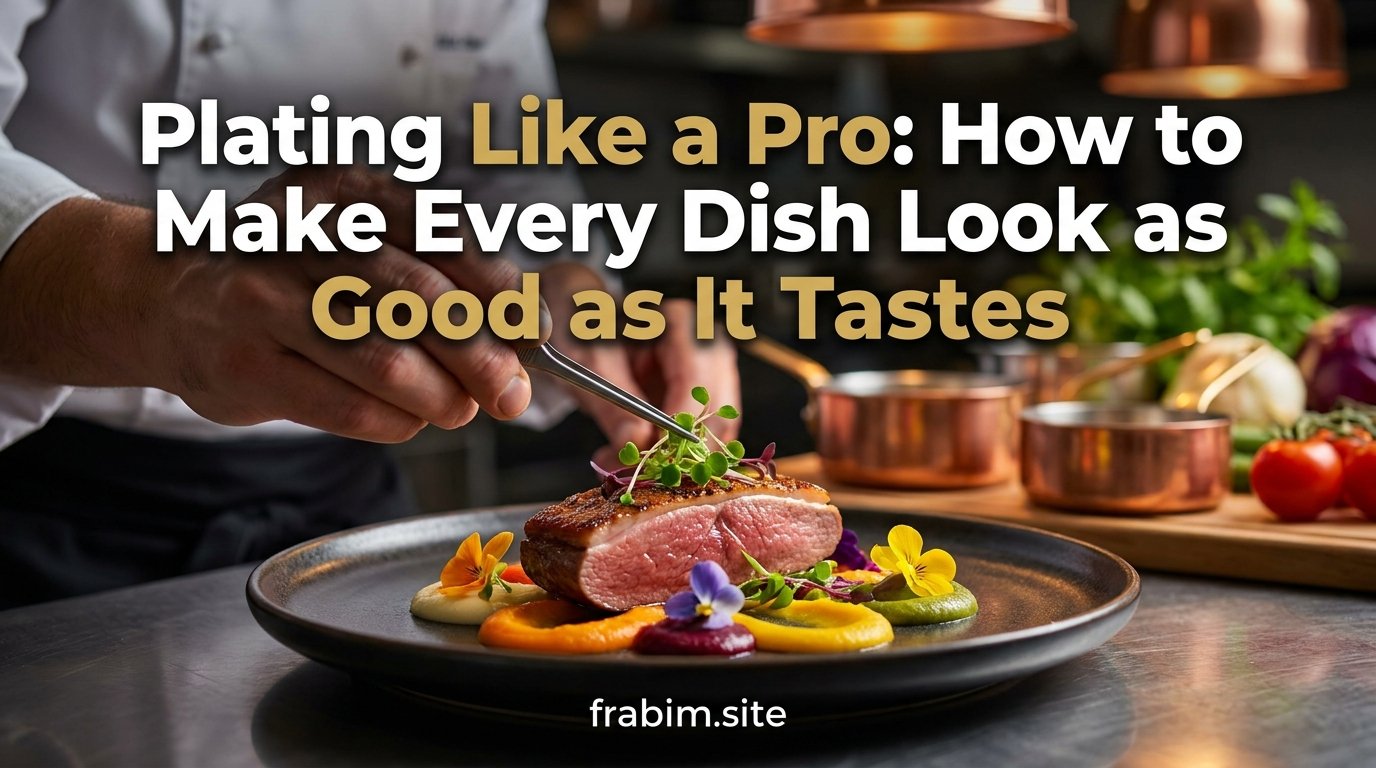
We eat with our eyes first. Long before a fork touches a plate, the way a dish looks sets the tone for the entire meal. That’s why presentation has become just as important as flavor for chefs, home cooks, restaurant owners, and anyone sharing food online. A thoughtfully arranged plate can turn even the simplest ingredients into something that feels special.
Good plating isn’t about fancy tricks or expensive equipment — it’s about understanding a few core principles: color, balance, texture, and restraint. Once you grasp these, you can apply them to almost any dish, from a weeknight dinner to a dish meant for Instagram.
Why Presentation Actually Matters
People form opinions about food before they ever taste it. A well-arranged plate signals care, freshness, and quality — and that perception genuinely changes how a meal is experienced. Here’s what strong presentation does for you:
- Builds anticipation before the first bite
- Makes portions feel intentional rather than thrown together
- Signals quality and effort
- Photographs better for social sharing
- Elevates even budget-friendly ingredients
Choose a Plate That Works For the Food
Your plate isn’t just a serving surface — it’s the background of your composition.
Size matters. A plate that’s too small crowds the food and makes it look messy. One that’s too large makes portions seem skimpy. Aim for a size where the food is the focus, with some breathing room around it.
Go neutral. White or off-white plates are popular for a reason — they let the colors of the food pop. Dark or earthy plates can work beautifully too, especially for rustic or heartier dishes.
Match the mood. Sleek, modern dishes suit minimal, geometric plates. Homestyle or rustic meals often look more authentic on textured, handmade-style dinnerware.
Build in Color Contrast
A plate full of similar tones — beige meat, beige starch, beige sauce — reads as flat, no matter how good it tastes.
Bring in natural color from:
- Bright greens (herbs, leafy vegetables)
- Reds and oranges (tomatoes, peppers, carrots)
- Purples (radicchio, cabbage)
- Creamy whites (sauces, soft cheeses)
Even one or two pops of color can completely change how appetizing a plate looks.
Arrange With Intention, Not Symmetry
Random placement usually looks careless, but perfect symmetry can feel stiff and unnatural. The sweet spot is somewhere in between.
- Place the main element slightly off-center rather than dead in the middle.
- Let sides and garnishes orbit around it rather than line up evenly.
- Keep portion sizes proportional — no single component should visually dominate the others unless it’s meant to be the star.
Don’t Forget Texture
Texture is what makes a dish interesting to eat, not just look at. Pairing contrasting textures adds depth:
- A crisp element next to something soft or creamy
- Crunchy toppings on smooth purées
- A toasted or seared surface against something tender underneath
Garnish With Purpose
A garnish should add something — flavor, color, or texture — not just sit there for decoration.
- Stick to elements that are actually edible and complementary: herbs, citrus, microgreens, toasted nuts, a light dusting of spice.
- Resist the urge to over-decorate. One or two well-placed garnishes usually beat five scattered ones.
Play With Height
A completely flat plate can look one-dimensional. Adding vertical elements gives a dish more presence.
- Stack components instead of spreading them out — think layered pancakes, or vegetables tucked beneath a protein.
- Use naturally tall ingredients like herb sprigs or thin crisps to draw the eye upward.
Handle Sauce Like a Finishing Touch
Sauce can make or break a plate.
- Use a spoon or squeeze bottle for clean lines instead of pouring freely.
- Less is more — too much sauce can drown the main ingredients and look sloppy.
- A simple swirl, dot, or zigzag pattern adds a professional touch without much effort.
Keep It Clean
This one is easy to overlook but makes a huge difference:
- Wipe smudges and drips off the plate’s edge before serving.
- Make sure sauce lines stay neat rather than smeared.
- A spotless plate instantly looks more polished, even with simple food on it.
Mind Your Portions
Overloading a plate is one of the most common presentation mistakes.
- Leave some empty space — it draws attention to the food rather than competing with it.
- Many high-end restaurants deliberately under-fill the plate to create a sense of elegance.
Use Ingredients at Their Freshest
Wilted herbs or overcooked vegetables drag down even the most carefully arranged plate.
- Add delicate garnishes right before serving.
- Cook vegetables to retain color and snap.
- Serve promptly once plated, since heat and time can dull both appearance and texture.
Borrow a Few Food Stylist Tricks
Professional food stylists rely on some simple, repeatable rules:
- Give the dish a focal point. One ingredient should clearly be the star.
- Place things for a reason. Every element on the plate should feel deliberate.
- Favor odd numbers. Three garnishes or five pieces of garnish tend to look more natural than even, paired arrangements.
Quick Tips by Dish Type
Salads — Mix in varied colors, build upward instead of laying everything flat, and add crunchy toppings last so they stay crisp.
Pasta — Twirl into a neat mound rather than spreading it out, top with herbs or cheese, and avoid drowning it in sauce.
Desserts — A light dusting of powdered sugar or cocoa, a few fresh fruit pieces, and a simple sauce design go a long way.
Burgers & Sandwiches — Stack layers neatly, use a skewer to hold tall builds together, and pair with a visually interesting side.
Plating for the Camera
Since so much food is now seen on a screen before it’s ever tasted in person, a few extra habits help:
- Shoot in natural light whenever possible.
- Keep the background simple so the food stays the focus.
- Capture texture by getting close and trying different angles.
Mistakes Worth Avoiding
- Overcrowding the plate — it kills visual clarity.
- Too many garnishes — clutter, not elegance.
- No color variation — monochrome dishes feel flat.
- Mismatched plates — even great food can look off on the wrong dinnerware.
- Sloppy edges — smudges undercut an otherwise great presentation.
The Psychology Behind It All
There’s real science behind “eating with your eyes.” Studies on perception consistently find that people rate identical food as tasting better when it’s presented attractively. Color, arrangement, and balance shape expectations before a single bite is taken — which is exactly why chefs put so much thought into plating.
Final Thoughts
Flavor will always come first, but presentation is what makes people excited to dig in. With a few intentional choices — the right plate, thoughtful color, balanced portions, and a clean finish — anyone can turn an everyday meal into something that looks (and feels) special. You don’t need professional training, just a bit of patience and an eye for detail.





Leave a Reply